This is a follow-up to my article on the West Virginia Coal Mining Wars that you can find here.
The West Virginia Coal Mining Wars were a topic about which I had very little prior knowledge. I chose the topic based on a small mention in another book. I can honestly say I don’t regret that decision. The Mining Wars make for a fascinating study and an enthralling read. It is shocking to think that something as significant as the Mining Wars occurred in the United States.
The struggles of our ancestors for better working conditions and rights must be acknowledged and honored. Even if you have issues with where we are now, it’s worlds better than the conditions in which these men worked. Their fight and battles helped improve things, even if it was a slow crawl. Their sacrifices should be acknowledged.
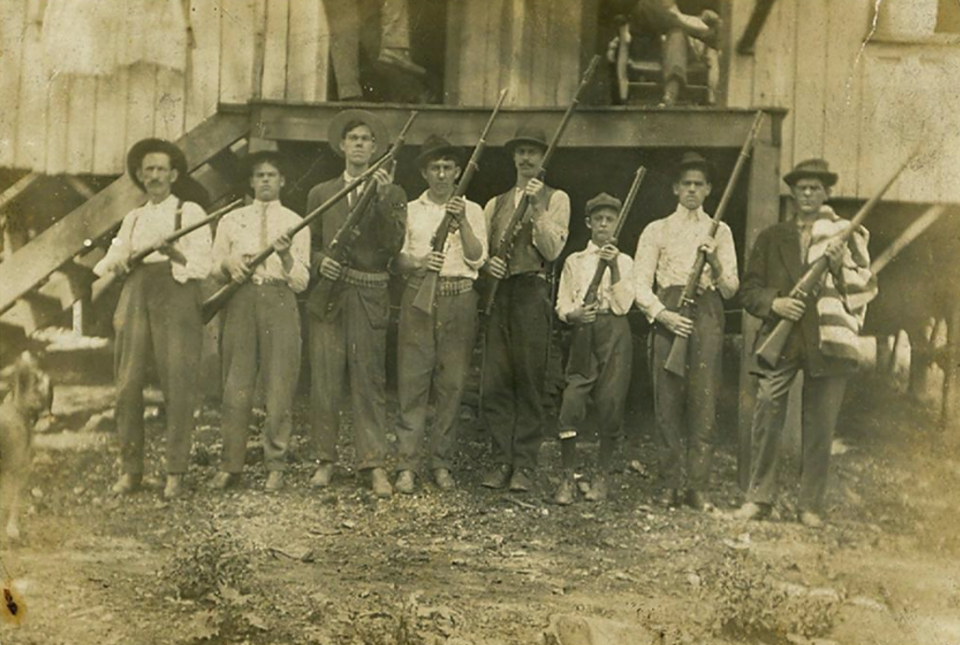
If you want to ignore my rant on the importance of knowing history, I understand, but I still think you have to acknowledge how fascinating this story is. Typically, when you hear about a war between a company and its employees, the word war is hyperbolic. However, these are much closer to the real thing. It involved high-end weaponry, including machine guns, and led to hundreds of deaths. This wasn’t some argument called a war. No, the Coal Mining Wars had actual battles and shootouts.
The Coal Mining Wars also had a tinge of the Wild West feel. People like Sid Hatfield are walking around with his two guns and acting like a gunslinger from a Western movie. Can’t you picture a figure like Mother Jones in one of those Westerns trying to help people? Its war meets Western in West Virginia. It really is a great story to read, and it just so happens to be true.
Now, let’s move on to the reviews of my sources.
The Devil Is Here in These Hills: West Virginia’s Coal Miners and Their Battle for Freedom by James Green. Buy Here
Green’s book is probably the most used source in my article. He has an excellent way of telling the story. Green’s goal was to focus on the overall story of the Mining Wars, unlike some historians who focused on a specific region, time, or battle. From my experience, I know that trying to distill a large topic into something consumable is extremely difficult, but Green does a fantastic job.
There is a lot for the reader to focus on, including people, locations, and battles. Green’s strength may be keeping the reader on track. Green maintains a strong story structure and covers all the critical events. I’m glad I found Green’s book first because it piqued my interest and allowed me to delve into the topic.
Life, Work, and Rebellion in the Coal Fields: The Southern West Virginia Miners, 1880-1922 by David Corbin Buy Here
Corbin’s work extends beyond Green’s in that it encompasses more than the mining wars and seeks to discuss the miners’ lives even before the wars. Corbin has skills similar to Green in that he keeps things coherent and not overwhelming. Corbin helps the reader understand the miners and their mentality. After reading it, you have a much better understanding of who these men were and what their lives were like.
It’s hard for me to separate Green and Corbin in my mind. I read them consecutively, and they were my first and primary sources. They complement each other well. The two books together provide the reader with a comprehensive understanding of the wars. I’m not sure if I’ve done this before, but if you’ve read one, you should also read the other.
Thunder in the Mountains: The West Virginia Mine War, 1920-21 by Lon Savage Buy here
First things first. I must apologize to Mr. Savage for writing his first name as Leon multiple times. I couldn’t stop myself. Now that I have that out of the way, I can proceed with my review. I found Savage’s book late in my research. I was seeking another source to expand my knowledge base. I was glad I found it! Savage focused on a tighter period, which was helpful because I found it more challenging to find other sources in those later years.
I think I enjoyed Savage’s telling of the Sid Hatfield story the best. Sid’s story serves as the introduction to Savage’s book, indicating that Savage clearly cares about the tale. I’m not quite sure why it’s my favorite; I just highly enjoyed it. I would definitely read Savage’s book for Sid’s story alone. However, the rest is just as good.
 Here For History
Leave a comment