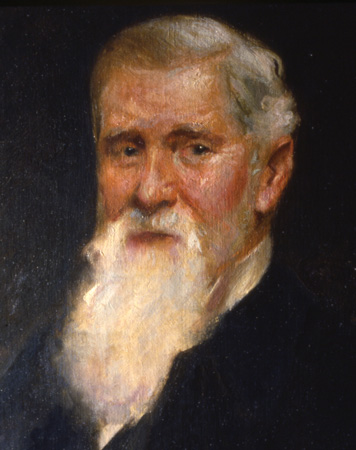
While researching Reconstruction, I came across the impact of Jay Cooke’s railroad failure. I was fascinated that one man’s poor business decision was blamed for launching a financial panic that ended in a global depression. How could he be responsible for the second-worst depression in American history? It seemed like the perfect topic to research.
What I quickly came to learn, and which I noted in my article, is that Cooke’s collapse was just the match that ignited the fire. Others poured the gasoline. The world was heading to a depression either way. That’s not to say that the story isn’t interesting or important. Cooke’s venture intersected with important events in American history. The Northern Pacific and its expansion West exacerbated the tensions between the Native American tribes and the United States. Furthermore, as I cover in my article, the Northern Pacific is responsible for Custer being in the Dakota Territory, the place of his infamous defeat. That significant piece of history has gained a spot in American mythology.
Understanding what caused the Panic of 1873 helps people understand the Panic and the following depression. Considering that the depression helped end Reconstruction, it became highly relevant to American life. Americans still feel the ramifications of Reconstruction. Also, the American financial system is built upon the responses to crises. To know how the system arrived at its current point, you must look at the many economic crises that forced responses. Many of the most critical pieces of banking legislation are passed in the aftermath of a crisis. Which makes this relevant to your life. If at any point you voted, the candidate you chose will have ideas for the banking industry and financial reform. It’s vital that you understand why previous American leaders made their decisions. Only then can you make an informed decision. It is why history matters.
Here are the reviews of the books I used for my research. You’ll note there are only two. While there are a number of academic articles on the subject, not much has been written about this specific event.
Jay Cooke’s Gamble: The Northern Pacific Railroad, the Sioux, and the Panic of 1873 by M. John Lubetkin. Buy Here
Lubetkin’s book is the most commonly used source for my article. That is for two reasons:
- It is the only book I could find that solely focuses on the topic.
- It is an excellent book.
Lubetkin does a fantastic job of weaving Cooke’s story with the greater picture of the American expansion west. Lubetkin helps the reader understand the context of the situation and the way the railroad impacted other areas of life. While on the surface, it would seem this is a niche topic, I disagree. This book tells the story of post-Civil War America and the trials and tribulations of the men trying to create a legacy. It is also an easy-to-read work. Lubetkin tells the story of the railroad in simple terms, which keeps the reader moving quickly.
The real strength of Lubetkin’s book is its focus on people. He tells the story of the surveyors through individuals, making it feel more personal. Lubetkin also focuses on the main players around Cooke. Lubetkin creates a cast of characters that helps the reader understand the situation. These aren’t some no-name back office figures fighting with Cooke. No, the reader knows them and their motivations. Lubetkin then takes the people he describes and presents events in a concise, easy-to-follow format for the reader.
I highly enjoyed this book.
Reconstruction Updated Edition: America’s Unfinished Revolution, 1863-1877 by Eric Foner. Buy here
I discussed this book in my follow-up article on Reconstruction. It is a must-read for anyone who cares about Reconstruction.
Thanks for reading!
 Here For History
Leave a comment