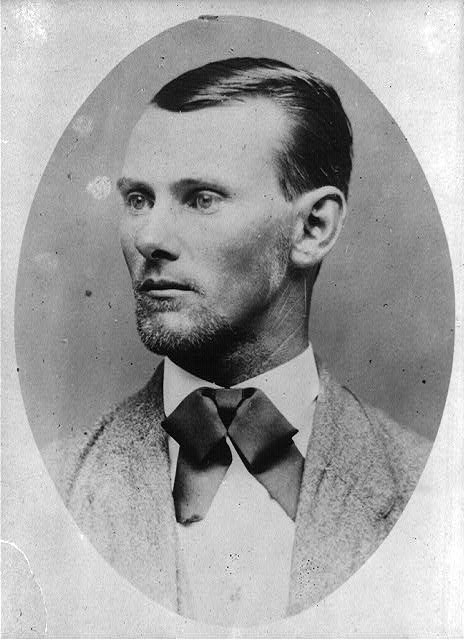
While researching my article on the Pinkertons, I saw Jesse James’s name pop up often. Based on the snippets I read, I was naturally interested, so I decided to make Jesse the topic of an article. Jesse lived a fascinating life; no wonder he has been part of the American imagination for so long. However, the mythology of his life and how and why it developed is just as interesting as his actual life.
In popular culture, Jesse James is an outlaw fighting against oppressive businesses, a Robin Hood figure looking to help those less fortunate around him. As my article says, things couldn’t be further from the truth. Sure, Jesse targeted big businesses like banks and railroads, but that was more a byproduct of their having money than Jesse’s grand plan. Furthermore, Jesse may have refrained from robbing regular civilians from time to time, but he by no means gave the money he stole to the poor. He was a violent man who wanted revenge for the Confederacy’s defeat and really didn’t know how to live a normal life.
I wasn’t shocked that someone’s real life deviated significantly from the story of their life. It happens a lot with popular figures. What did shock me was the fact that it was done on purpose. I would have never thought Jesse played a part in telling his story.
The building of the Jesse James mythology is why I think this topic is important and relevant even today. People are still debating the origins of the Civil War today- they like to ignore the obvious answer. Part of the reason for the debate is that in the aftermath of the Civil War, Confederate sympathizers started writing about the war. As part of this plan, they started talking about the bravery of the Confederate soldiers. Jesse James’s partner in reputation building, John Edwards, was a practitioner of pro-Confederate writing. He used Jesse to help his cause. Jesse became this righteous man who was only fighting against the bad business and economic practices of the Union. Edwards was telling the readers that they were silly to think he was fighting to maintain slavery. Oh no! He wanted to protect normal Missourians. People must understand that Edwards did this intentionally to help change the perception of the Confederacy and its soldiers. Our arguments about the Civil War today are based on the attempts of writers like John Edwards to change the narrative.
Now, let’s go on to the review of the sources I used. I should note that I think highly of all these books, which is why I used them.
Considering using one of my links if a book interests you. Please Note: As an Amazon Associate, I earn from qualifying purchases.
The book I used most for this article is T.J. Stiles’s work Jesse James: Last Rebel of the Civil War. This book was fantastic, and I don’t know if I could have completed the article without it. Stiles goes in-depth into not only Jesse’s life but also the period. I learned a great deal about Missouri during the Civil War. I would suggest that anyone interested in Jesse James read this book. You’ll come away knowing all about his life and a lot about Missouri. It was my most used resource for a reason.
Purchase: Kindle, Audible, Hardcover, Paperback
The next book I used was James Muehlberger’s The Lost Cause: The Trials of Frank and Jesse James. Muehlberger uses the case that brought Jesse James to national attention as the backdrop for telling the story of Jesse. Muehlberger is not as detailed as Stiles, and his book has less on Missouri. However, his discussion on the trial and John Edwards’s role in Jesse’s life make this a valuable read.
Purchase: Kindle, Hardcover, Paperback
Mark Lee Gardner’s book Shot All to Hell: Jesse James, the Northfield Raid, and the Wild West’s Greatest Escape is a fun read about the downfall of the James-Younger Gang. Although Gardner provides some background on Jesse and his compatriots, the main focus is on the failed bank robbery and the manhunt that followed. This book is excellent for those who don’t want to focus on Jesse’s entire life but prefer to focus on the exciting conclusion of the famous gang.
Purchase: Kindle, Audible, Hardcover, Paperback
Finally, I used S. Paul O’Hara’s Inventing the Pinkertons; or, Spies, Sleuths, Mercenaries, and Thugs: Being a Story of the Nation’s Most Famous (and Infamous) Detective Agency for details on the Pinkerton raid that killed Jesse’s half brother. While this book had limited use for this article, I used it extensively for my article on the Pinkertons. It is an excellent work that covers their entire history in detail. I suggest this book to anyone who wants to know about the famous Pinkertons.
Well, that’s it for this one. Thanks for reading!
 Here For History
Leave a comment