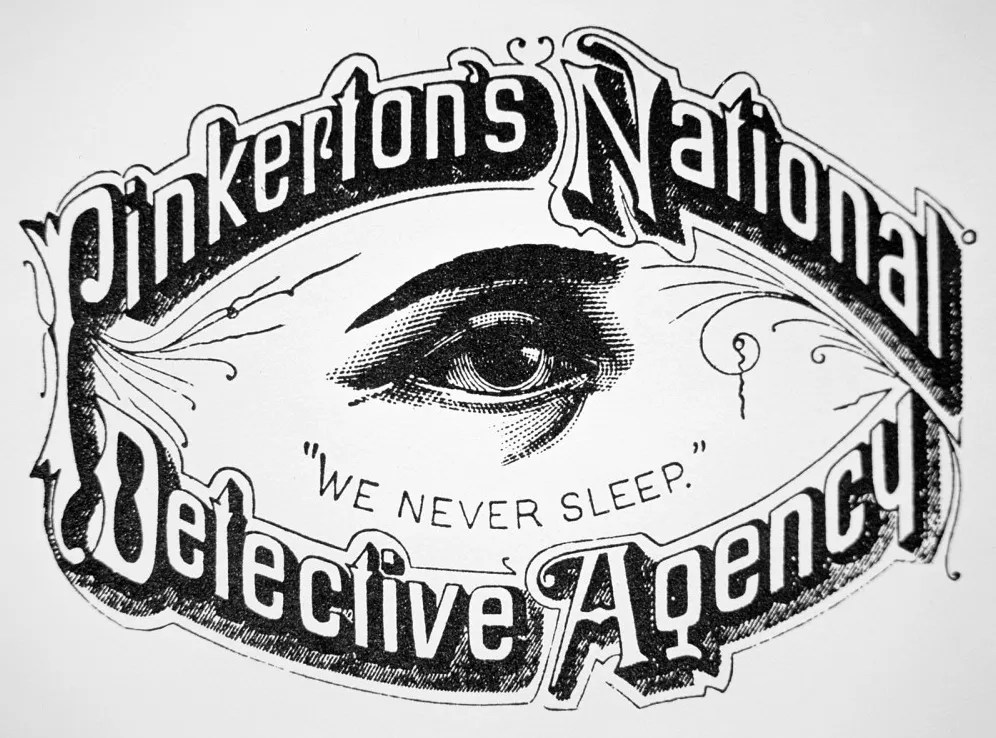
Chances are you’ve heard of the Pinkerton Detective Agency. They’ve been portrayed in books, movies, and video games. (I will never forgive them for what they did in Red Dead Redemption.) They’re such a mythical part of American lore that I could see some people questioning if they were real. Well, they are, and they still exist. They have dropped Detective Agency to go by Pinkerton’s Inc. This article will cover their beginnings in the 1860s, the wild ride of outlaw hunting and strike-breaking, and finally, their transition to a security company in 1937.
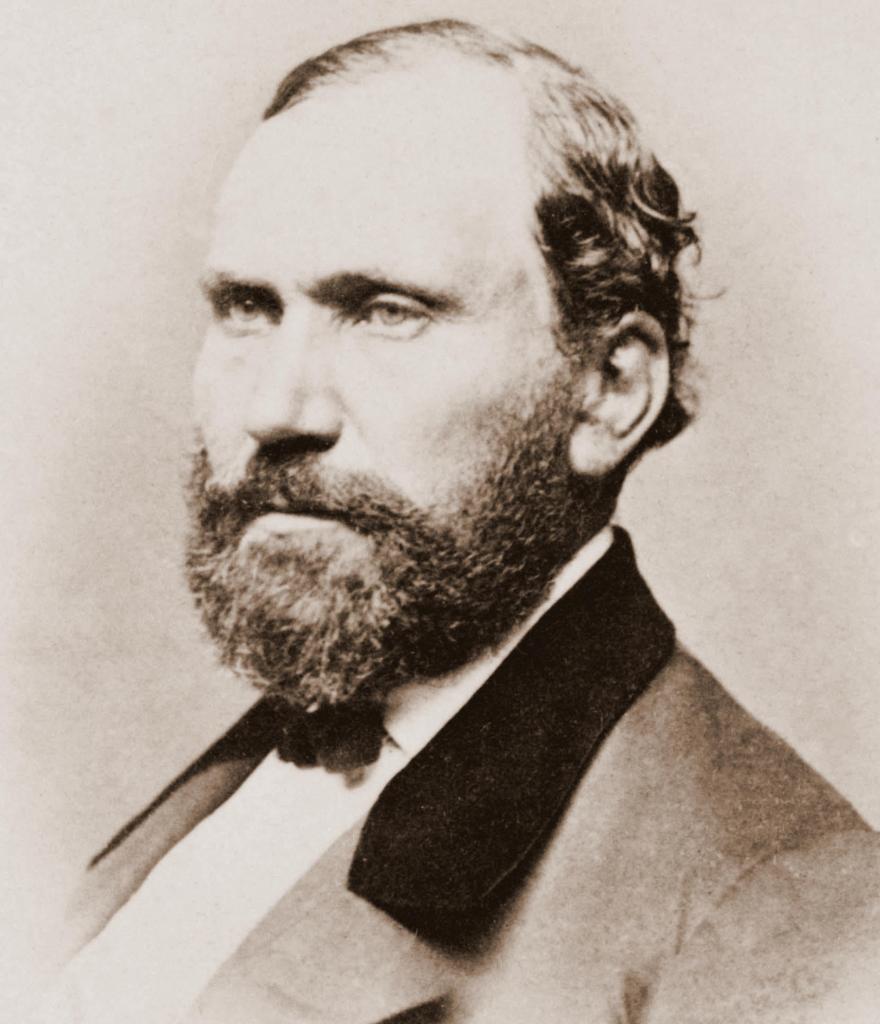
The Pinkertons were the brainchild of Allan Pinkerton. Pinkerton was born in Glasgow, Scotland, 1819 and participated in the Chartism movement in Scotland. Chartists demanded political reform. However, Chartists weren’t exactly the most popular people with the establishment. A warrant was put out for Pinkerton’s arrest, which caused him to flee to Chicago after stopping in Canada in 1842.
A strange twist of fate had Allan Pinkerton looking for wood on an island in the Fox River. I’m not sure if he found wood, but what he did find was a counterfeiters camp. He grabbed the local sheriff and claimed the reward. A normal person might receive the reward, think what a stroke of luck, and return to everyday life. Not Allan Pinkerton! Soon, Pinkerton was fielding calls from local businessmen asking for help with counterfeiters. For the next several years, Pinkerton would find himself in various government law enforcement jobs, such as sheriff’s deputy and special agent for the US Postal Service. While serving these jobs, he also began taking on security contracts from railroad companies. Local rail lines would hire Pinkerton to oversee security and employees. Noticing the need to move beyond one man, Pinkerton formed the North West Police Agency. His work guarding the rails led him to investigate theft from the Adams Express Company. Pinkerton successfully located the perpetrator and found the stolen money. Now, Pinkerton had a big case on which to hang his hat. So, he changed his company name to Pinkerton’s National Police Agency.[1]
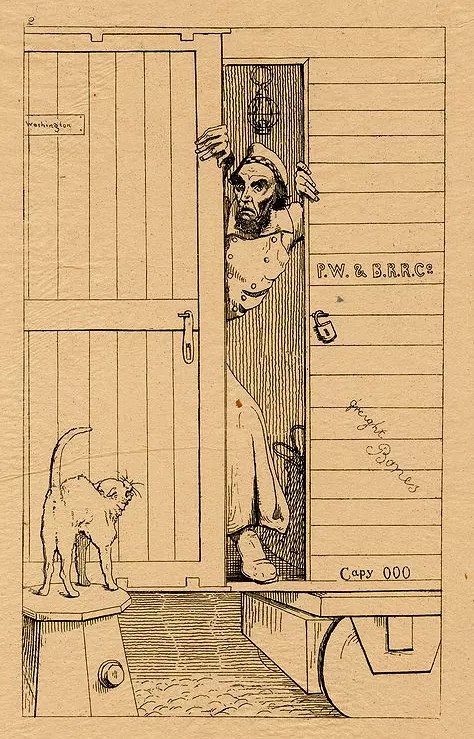
The big question is, “How does a detective guarding trains become world famous?” The answer is simple: foil an assassination plot on the soon-to-be President of the United States. President-Elect Lincoln was having dinner with the Pennsylvania governor in Harrisburg and was scheduled to take a train back to Philadelphia and down to Washington on February 21. This train would make one stop in Baltimore on its way down. Samuel Felton, who was involved with the rail line on which Lincoln would be traveling, hired Allan Pinkerton to investigate any potential issues. Pinkerton put his best man, Timothy Webster, on the case. Webster learned that at the Baltimore stop, pro-secession assassins would strike at Lincoln.[2] Pinkerton rushed to save Lincoln. He advised the President to alter his plans, leaving Harrisburg secretly much earlier than expected. He would be rushed to Philadelphia and from there through Baltimore to Washington. Lincoln was initially dubious but acquiesced to the plan once a second plot report arrived from a NY detective hired by Lincoln’s cabinet.
Scholars debate whether there was actually an assassination plot. However, they do not dispute that Lincoln eventually believed Pinkerton and listened to his advice. The New York Times reported on Lincoln’s changed schedule, acknowledging the proposed assassination plot.[3] Lincoln would receive some criticism and mockery for his decision to listen to Pinkerton and others. However, that didn’t matter. Lincoln was safe, and Pinkerton was a made man.
The next logical step for Pinkerton was to become the head spy for General George McClellan. At this point, McClellan was leading the Union Army and needed spies to help him understand Confederate movements. The historical consensus is that Pinkerton did an awful job as a chief spy. Historians often believe he overestimated Confederate strength and was at least partially responsible for McClellan’s hesitation to chase after the Confederate Army. However, author Jay Bonansinga believes that Pinkerton provided accurate information from McClellan that was separately verified by other sources.[4] He puts the blame solely on McClellan. In the end, Pinkerton’s fate was tied to McClellan, and once McClellan was out, so was Pinkerton.
Interesting fact for the reader. Timothy Webster, the Pinkerton agent who was one of the heroes of the Lincoln affair, was captured and hanged by the Confederates for being a spy—a sad end for a man trying his best to serve the Union.
After the Civil War, Pinkerton focused his efforts on the detective agency. His men continued to work for rail companies to protect them from robbery and theft. This period was also when Pinkerton got the agency involved in hunting down bank robbers and other outlaws. The Pinkerton Agency had successful investigations into criminal gangs, like their hunt of the Reno Gang.[5] However, their reputation as Western lawmen was built upon one failed investigation. It was built on their attempts to capture Jesse James.
The James-Younger gang were not good men. They were former Confederate guerillas taking revenge on a Union that defeated them. They felt no hesitation to kill, and contrary to popular belief, they did not share their money with regular people.[6] They caused chaos across Missouri and Minnesota as they pursued their selfish quests. Also, if you think I typed that wrong, I did not. They mainly operated in Missouri and Minnesota. That was their West.
Allan Pinkerton saw an opportunity for his agency with the James-Younger gang. Pinkerton first sent one of his agents, Joseph Whicher, to infiltrate the gang. Authorities later found his corpse.[7] I’m sure finding their comrade’s body was on the minds of the Pinkerton Agents when they surrounded the home of the James brothers on January 25, 1875. They tossed what amounted to a handmade grenade into the house. The occupants panicked and threw the grenade into a fire. It exploded and killed James’s young stepbrother. The explosion also tore the arm off a second occupant. Neither criminal James brother was home.[8] The public was outraged, but Pinkerton suffered no repercussions. The inclusion of local law on the raid probably didn’t hurt. The Pinkertons called off their hunt of the James-Younger Gang.
This incident may have fallen into obscurity, except the James-Younger Gang had an excellent public relations guy. Author John Newman Edwards wrote about the James-Younger Gang and created the image of Robin Hood and his band of merry men that would continue for decades. Soon after Edwards started his work, the James-Younger Gang would appear in dime-store Western novels. They would also be the outlaw heroes. Pinkerton probably wanted to bury this case, but he couldn’t escape it.
The Pinkertons wouldn’t stop trying to chase Western glory with the James-Younger Gang. The agency attempted to become part of the hunt for Butch Cassidy at the turn of the 20th Century. Agent Charles Siringo even reported having infiltrated the gang at one point.[9] They played a tertiary role in capturing some of Cassidy’s gang; however, they never caught Butch or Sundance.
The Pinkertons might be remembered more fondly if their history only consisted of chasing down outlaws. However, at some point, they decided to work for companies to stop strikes. Between 1873 and 1876, the Pinkertons infiltrated a secret society known as the Molly Maguires. The Maguires were immigrants from Ireland who had a reputation for violence. They responded violently to abuses suffered by workers while employed by the Philadelphia and Reading Railroad. Eventually, twenty miners accused of being Maguires were arrested and charged with a litany of crimes, including murder. They were convicted and executed due in large part to testimony from a Pinkerton Detective. Interestingly, the prosecution couldn’t even prove the Molly Maguires existed.[10]
Allan Pinkerton died on July 1, 1884, at 64. His sons took over the family business. They continued the work of defending industrialists. Chicago experienced strikes in 1886, two separate violent incidents that resulted in death. In the first incident, police fired into a crowd of protestors, killing four. The next rally at Haymarket Square saw protestors retaliate by throwing a handmade bomb that killed seven police officers. Police arrested eight men and charged them with murder, and called them anarchists. Testimony from a Pinkerton Detective was once again the critical piece for convicting the defendants. However, in June 1893, the governor of Illinois, John Altgeld, reviewed the trials and concluded that the evidence was contradictory and poor. He issued pardons for those convicted, but sadly, four had already been executed.[11] A great victory for the Pinkertons became a great shame.
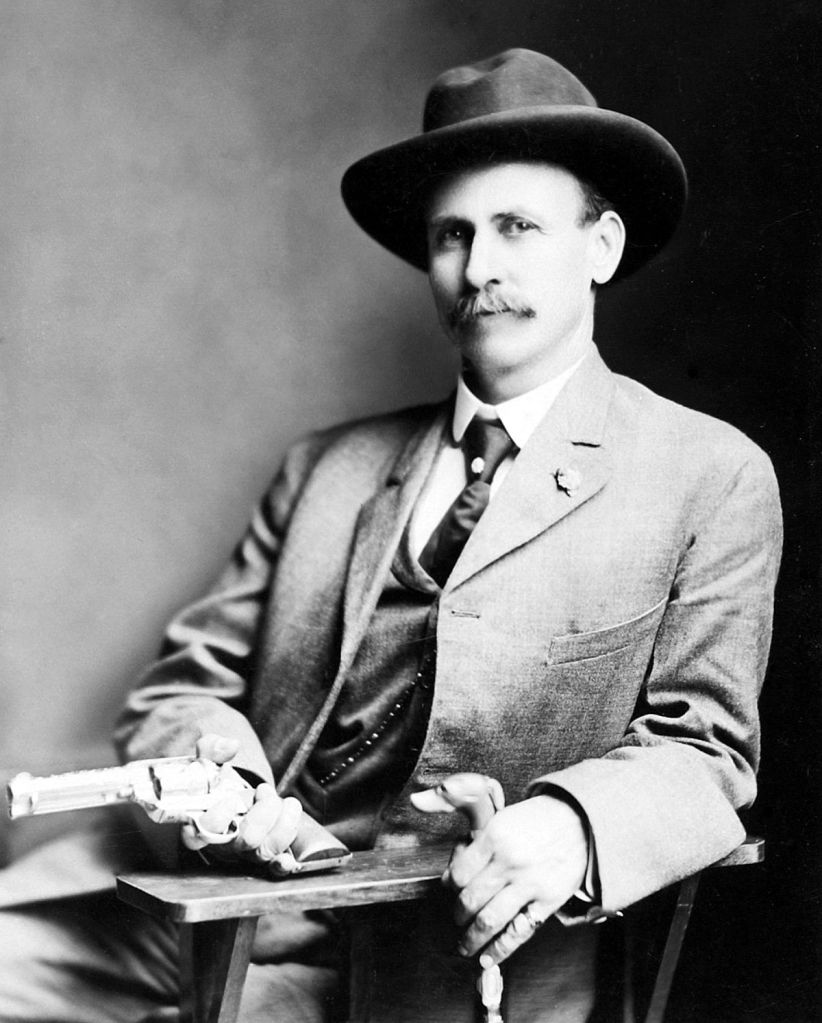
There are many stories of the Pinkertons acting as a private police force for the industrialists. One includes Pinkertons arriving by barge to guard a mill hiring scab workers in Pennsylvania. The barge was spotted and came under fire. The Pinkertons surrendered, and the striking workers took the detectives into custody.[12] How embarrassing. Former detective Charles Siringo wrote in his memoir about his investigation into a mining strike. The tale involves narrow escapes as the miners discover he is undercover, including hiding under the floors of a house as the miners search for him.[13] Of note, Siringo became unhappy with the Pinkerton Agency after he retired. They stopped the publishing of his memoirs, forcing him to call the agency the “Dickerson Detective Agency.” He would later publish a book where he spoke out against the Pinkertons and their work on behalf of industrialists.[14] It is hard to ignore that Siringo only felt this way after the Pinkertons hurt his wallet.
The agency’s work for businesses was giving them a bad name. Congress felt compelled to intervene, and on March 3, 1893, they passed the Anti-Pinkerton Act. The act severely limited the federal government’s ability to hire private firms like the Pinkertons. The agency attempted to relive its glory days with the previously mentioned hunt for Butch Cassidy, but those days were done. The 20th Century saw the Pinkertons change from detectives and strikebreakers to security. Even now, after being purchased by Securitas AB in 1999, their main focus remains security.
So, there is a brief history of the Pinkerton Agency. A company that built its reputation hunting outlaws but truly made its money breaking strikes. Hopefully, you’re not disappointed that there wasn’t more outlaw coverage. The fact is that their primary role in most outlaw hunts was providing information. If it wasn’t for their misadventures during their hunt for Jesse James, people might not even remember them for their role in bringing in outlaws. Their real role in American history is acting as the police force for private business. If you’re interested in the Pinkertons and want more, please read any of the books I used as sources below.
[1] S. Paul O’Hara, Inventing the Pinkertons; or, Spies, Sleuths, Mercenaries, and Thugs: Being a Story of the Nation’s Most Famous (and Infamous) Detective Agency (Baltimore, MD: Johns Hopkins University Press, 2016), 15-18.
[2] Jay Bonansinga, Pinkerton’s War: The Civil War’s Greatest Spy and the Birth of the U.S. Secret Service (Guilford, CT: Lyons Press, 2011), 65-67.
[3] “Secret Departure of the President Elect from Harrisburgh,” New York Times (1857-1922) (New York, N.Y.), February 25, 1861, 1861, https://www.nytimes.com/1861/02/25/archives/highly-important-news-secret-departure-of-the-president-elect-from.html.
[4] Bonansinga, 229-31.
[5] O’Hara, 38-41.
[6] Haygood, Wil, “A Story of Myth, Fame, Jesse James,” The Seattle Times (Seattle, W.A.), September 117, 2007. https://web.archive.org/web/20081229061215/http://seattletimes.nwsource.com/html/living/2003885037_jessejames17.html
[7] O’Hara, 42.
[8] O’Hara, 45.
[9] Charles Siringo, A Cowboy Detective: A True Story of Twenty-Two Years with a World Famous Detective Agency (Arcadia Press, 1912), 138-39.
[10] O’Hara, 67.
[11] O’Hara, 89.
[12] O’Hara, 93.
[13] Siringo, 55-69.
[14] Charles Siringo, Two Evil Isms, Pinkertonism and Anarchism: By a Cowboy Detective Who Knows, as He Spent Twenty-Two Years in the Inner Circle of Pinkerton’s National Detective Agency (1915).
 Here For History
Leave a comment